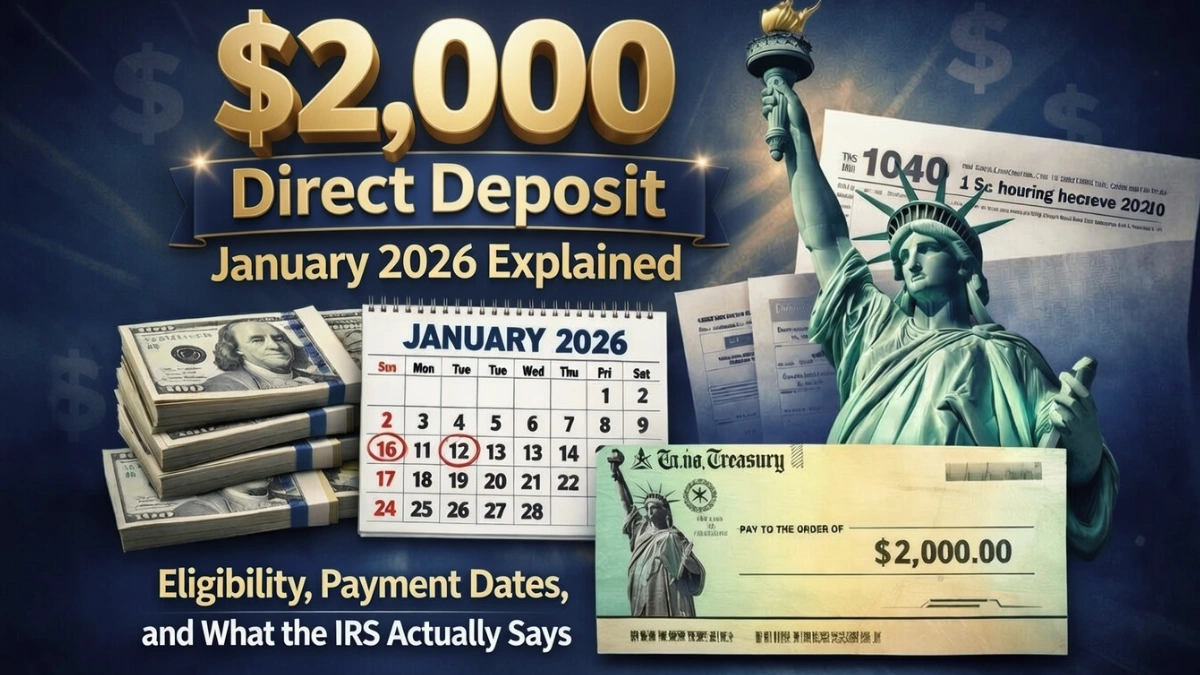
Reports about a possible $2,000 federal payment in February 2026 have attracted attention across the country. Many people are asking whether the payment is automatic, who qualifies, and when deposits might arrive. The most important point to understand is that there is no universal payment being sent to every American without conditions. Any deposit near $2,000 is usually connected to a specific federal program, tax refund, or approved benefit adjustment.
Where the $2,000 Amount May Come From
A payment of this size is often linked to income tax refunds for the 2025 tax year. Refundable tax credits such as the Child Tax Credit or the Earned Income Tax Credit can increase the total refund amount. In some cases, Social Security or disability beneficiaries may receive retroactive payments or corrections that raise their deposit amount. Each situation is different, and not everyone will receive the same figure. Some individuals may receive more than $2,000, others less, and many may receive no additional payment at all.
How Eligibility Is Determined
Eligibility depends entirely on the underlying federal program. For tax refunds, a complete and accurate 2025 tax return must be filed. The refund is calculated using income, taxes paid during the year, and any credits claimed. Refundable credits have income limits and specific requirements, especially when dependents are involved.

For benefit-related payments, eligibility is based on approved claims, benefit adjustments, or past-due amounts. Each case is reviewed individually using official records. There is no single rule that applies to everyone.
Expected Payment Timeline
If the payment is connected to a tax refund, processing usually begins after the IRS opens tax season in late January. Electronic returns with direct deposit selected are generally processed within about three weeks. Returns filed early may result in deposits by mid-February, while those filed later may receive funds toward the end of February or early March. Refunds that include certain credits may face additional verification delays.
Benefit payments typically follow the regular monthly schedule set by the issuing agency.

Steps to Avoid Delays
To improve the chances of timely payment, taxpayers should file electronically, choose direct deposit, and carefully review all personal and banking information before submitting a return. Incorrect details, identity verification requests, or mismatched income records are common causes of delays. Monitoring official tracking tools helps clarify the current status of a payment.
Final Clarification
The widely discussed $2,000 federal payment is not an automatic nationwide payout. It depends on individual tax filings, refundable credits, or approved benefit adjustments. Relying on official government sources is the safest way to confirm eligibility and timing.
Disclaimer: This article is for general informational purposes only. Payment eligibility, amounts, and timelines depend on official federal agency rules and individual circumstances. Always verify details through authorized government resources.
यह भी पढ़े:
 IRS Confirms February 2026 Tax Refund Dates