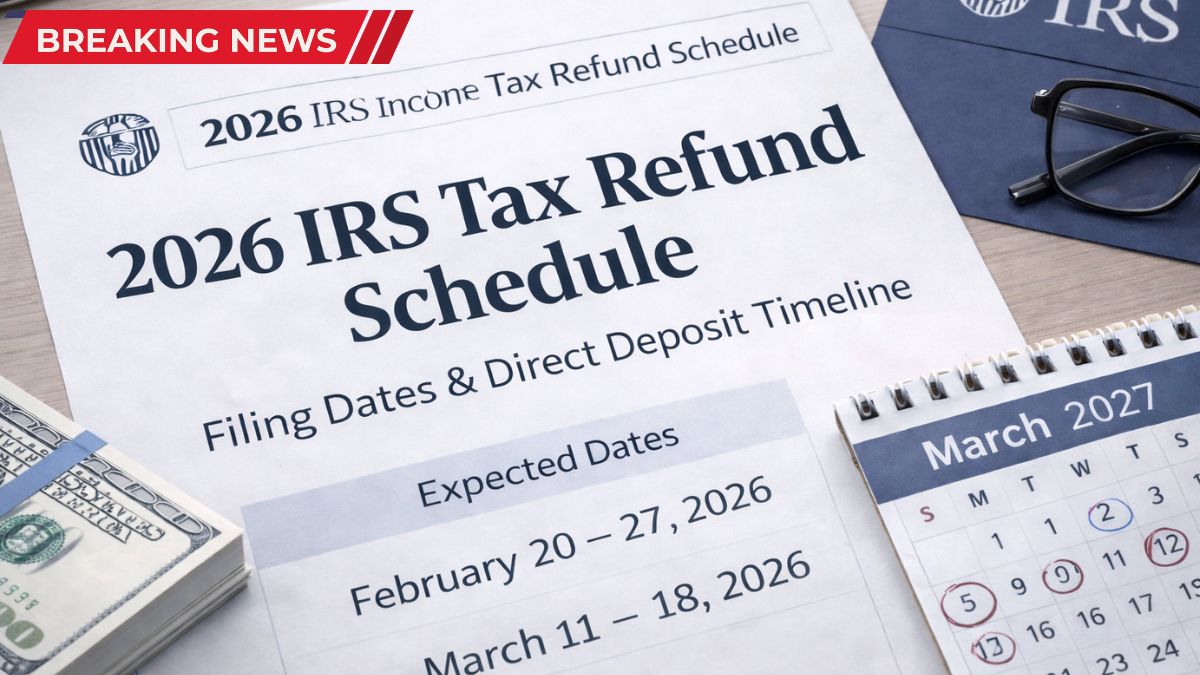
As the 2026 tax season begins, millions of Americans are preparing to file their federal income tax returns for the 2025 tax year. For many households, a refund is more than extra cash. It often helps cover rent, utility bills, school expenses, medical costs, or other important financial needs. Understanding how the refund process works can make the experience less stressful and allow families to plan with greater confidence.
The Internal Revenue Service is expected to start accepting tax returns in the final week of January 2026. Although people can prepare their returns earlier using tax software or professional services, the IRS does not begin processing returns until the official opening date. Filing early can be helpful because it places your return closer to the front of the processing line once the system opens.
The standard filing deadline will be April 15, 2026. While taxpayers may wait until closer to the deadline, filing earlier in the season can reduce the risk of delays caused by high submission volume. Early filing also gives individuals extra time to correct mistakes if any issues are discovered.

There is no fixed refund schedule that applies to everyone. Each tax return is reviewed separately. Refund timing depends on how the return is filed, the payment method selected, and whether the information is accurate. Electronic filing is usually faster because returns move directly through automated systems. Paper returns must be handled manually, which can extend the waiting period by several weeks.
Choosing direct deposit is typically the fastest and safest way to receive a refund. Once a return is approved, funds are sent electronically to the taxpayer’s bank account, and many people receive their money within about three weeks after acceptance. However, banks may require one or two business days to fully process the deposit.
Some refunds may take longer. Returns that include certain income-based or family-related credits often require additional verification. Errors such as incorrect Social Security numbers, missing forms, or inaccurate income details can also delay processing. Carefully reviewing all information before submitting a return can help avoid unnecessary delays.

Taxpayers can monitor progress through the official IRS online tracking tool, which provides updates after a return has been received and approved.
Disclaimer: This article is for informational purposes only and does not provide tax, legal, or financial advice. Tax deadlines, refund timelines, and eligibility requirements may change based on IRS policies and individual circumstances. For personalized guidance, consult official IRS resources or a qualified tax professional.