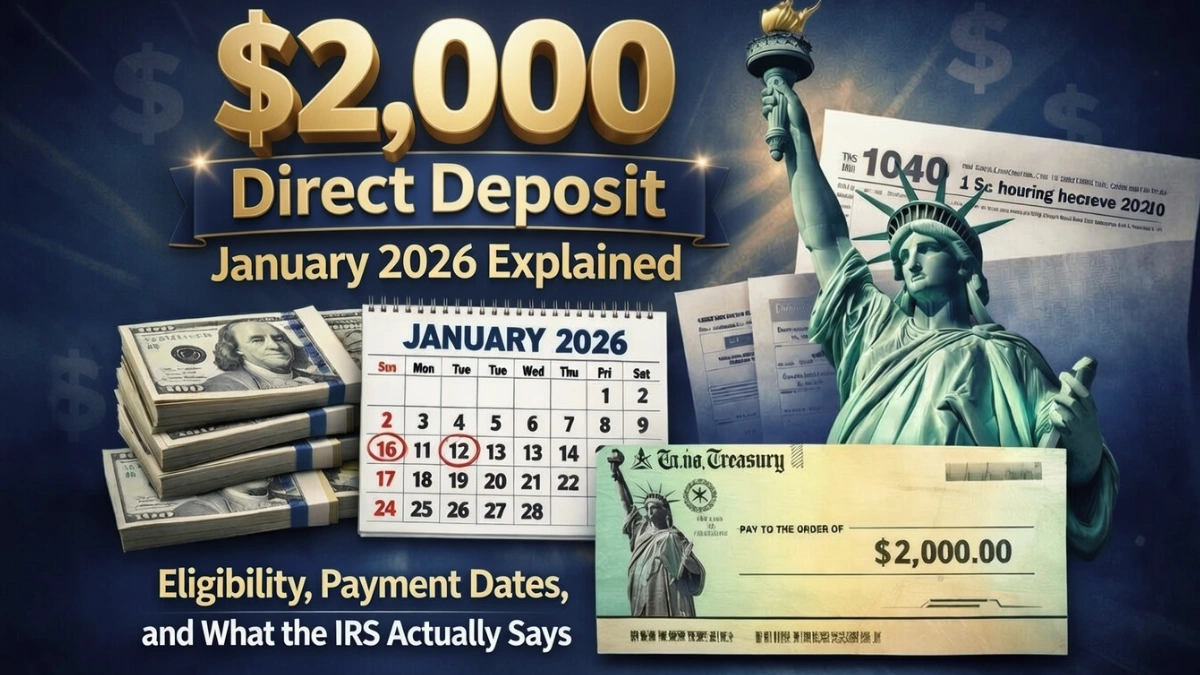
As February 2026 approaches, many Americans are hearing repeated discussions about a possible $2,000 direct deposit from the federal government. Social media posts, online videos, and shared messages have created both excitement and uncertainty. Families who are managing rising costs naturally want to know whether this payment is real, who might qualify, and whether they need to apply. Clear and accurate information is important before making financial decisions based on online claims.
Why the $2,000 Amount Keeps Appearing
The figure of $2,000 became widely known during previous economic relief programs approved during national emergencies. Those payments provided meaningful support to households during difficult times. Because the amount was significant, it remains familiar to many people. In 2026, with expenses such as rent, groceries, fuel, and insurance still high, public conversations about new financial help continue. However, repeated discussion does not automatically mean that a new payment has been approved.

Current Official Status of a February Payment
As of early 2026, there is no confirmed nationwide $2,000 stimulus payment authorized by Congress or formally announced by the U.S. Treasury. Federal payments require legislation before they can be issued. Without a law passed by Congress and signed into effect, no universal direct deposit program can legally begin. Claims that a payment is guaranteed for all Americans in February are not supported by official government announcements.
Why Some People May Still See $2,000 Deposits
यह भी पढ़े:
 IRS Confirms February 2026 Tax Refund Dates
Even without a new stimulus program, some individuals may notice deposits close to $2,000 in their accounts. These amounts usually come from regular systems such as federal tax refunds or benefit payments. Taxpayers who file their 2025 tax returns and qualify for refundable credits may receive refunds near that figure. Social Security recipients may also see adjusted payment amounts due to cost-of-living increases. These deposits are based on personal eligibility and tax calculations, not on a new blanket relief program.
What Would Happen If a New Payment Were Approved
If Congress were to approve a new federal payment in the future, specific eligibility rules would apply. Income limits, filing status, and residency requirements would determine who qualifies. Official details would be released through trusted government channels, and agencies would clearly explain how and when payments would be distributed.

Staying Informed and Avoiding Scams
Rumors about government payments often attract fraud attempts. Federal agencies do not request personal or banking details through random text messages or social media posts. Verifying information through official government websites is the safest approach.
Conclusion

At this time, there is no confirmed universal $2,000 direct deposit scheduled for February 2026. Some Americans may receive deposits near that amount from refunds or existing benefits, but these are not new stimulus checks. Relying on verified information helps prevent confusion and protects financial security.
Disclaimer: This article is for informational purposes only and does not provide legal, financial, or tax advice. Government programs, eligibility requirements, and payment timelines may change. Readers should consult official IRS, SSA, or U.S. Treasury sources for accurate and updated guidance.